Table of Content
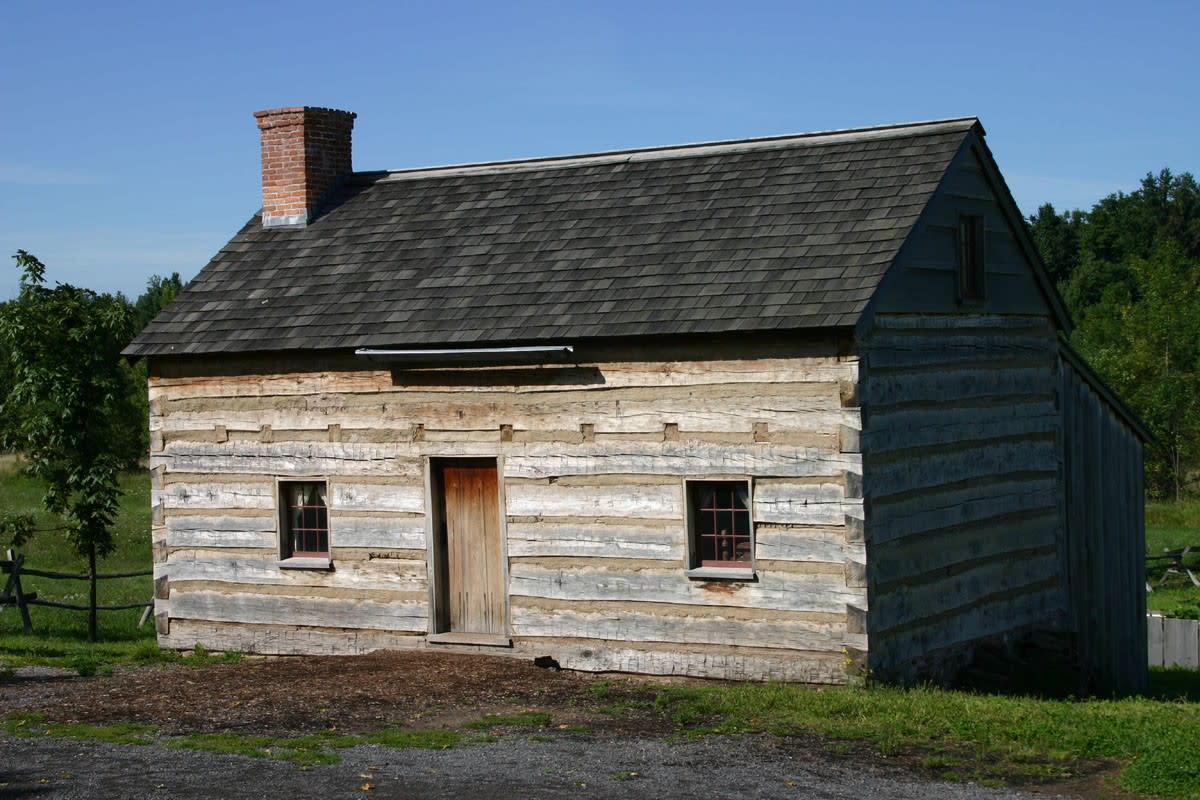
Near the log cabin is a very large building– a “temple.” The place was totally devoid of any people. The cabin was obviously decorated to imitate a typical family dwelling in the early 1800s. The Smith log home in Palmyra, NY is a Church Historical Site, owned and operated by The Church of Jesus Christ of Latter-day Saints. It is open seven days a week and may be entered when accompanied by missionary hosts during posted hours. Shortly after Joseph’s experience, tragedy struck the Smith family with the death of Joseph’s elder brother Alvin.
Three days later, a raiding party massacres church members, including children, at Haun's Mill, The Mormon community leaves Missouri for Illinois. Non-Mormons fear that the Mormons, who have formed a militia, will take their land. And although Smith's church officially supports slavery, other Missourians also oppose some Mormons' abolitionist sentiments.
The Bible Or The Book Of Mormon?
After Smith’s death, Mormon leaders incorporated polygamy as a Mormon doctrine until 1890, when it was repealed under pressure by the U.S. Smith later claimed that an angel named Moroni appeared to him in 1823, had him transcribe and then bury some golden plates and start up a new church, the Mormon Church, named after the Book of Mormon. The Ensign Peak Foundation is an independent 501 organization whose mission is to identify, preserve, and commemorate sites, events, and people of significance in Latter-day Saint history throughout the world. The kitchen of the Smith home was the scene of one of the most disappointing events in the life of the Prophet Joseph Smith. In the summer of 1828, against the Lord’s clear counsel, Joseph allowed his scribe, Martin Harris, to take 116 pages of handwritten translation of the Book of Mormon plates to show to his wife in Palmyra, New York.

The economic order, like those of many communistic societies of the era, requires church members to give their property to the church for redistribution. Shortly after the Erie Canal opens in 1825, upstate New York is still a sparsely populated, rugged frontier. The area will later be called the "Burned-Over District" -- burned over by endless religious revivals during this era of spiritual seeking.
Compare the Book of Mormon with the Bible:
Illinois authorities revoke Nauvoo's city charter and ask the Mormon community to leave. In February 1845, emerging church head Brigham Young leads thousands of Saints out of Illinois, heading west to Mexican territory. On October 27, 1838, Missouri governor Lilburn Boggs takes a dramatic stand to end violence. His executive order calls for the expulsion or extermination of all Mormons from the state.
No mention of people, nations, or places peculiar to the Book of Mormon have ever been found.
Religious background
The Smith family built the original 1½-story hewn-log home not long after they arrived in Palmyra. During the time that the Prophet Joseph Smith lived in the family log home in Palmyra, New York, events transpired that greatly influenced the young boy and prepared the way for the restoration of the gospel. Remembrances from the Smith family reveal their concerns and activities while living in the log home.

A number of family members fell ill, and Joseph experienced a common complication whereby typhoid bacteria infected bone, in Smith's case, the shin bone. After the typically horrific early nineteenth-century surgery without either anesthetic or antiseptic, Smith eventually recovered, though he used crutches for several years and had a slight limp for the remainder of his life. The painting of Joseph Smith bringing home the gold plates from the Hill Cumorah portrays the involvement of his family, West said.
Move to Harmony Township, Pennsylvania
Significantly, the Smith family lived in this log home during the time of the First Vision and visits from the angel Moroni informing Joseph, Jr., regarding the coming forth of the Book of Mormon on the night of September 21-22, 1823. Not long after the Smiths moved into the log home, situated a few hundred feet to the north, they contracted to purchase an additional 100 acres adjoining their 80 acre farm. Alvin determined to build a home where his parents could enjoy their family in their later years and to repay them for all of their love, toil, and sacrifice in behalf of their children. Sadly, before Alvin could finish this more spacious frame home, he died on November 19, 1823, while the Smiths still resided in the log home. He passed away just a few months after Moroni had appeared to his younger brother. The Mormons toil on the large stone building from 1833 until 1836, dedicating one day out of seven to its construction.

Therefore, Smith sent his mother to the home of Martin Harris, a local landowner said at the time to be worth about $8,000 to $10,000. Over the next few days, Smith took a well-digging job in nearby Macedon to obtain money to buy a solid lockable chest in which he said he would put the plates. By then, however, some of Smith's treasure-seeking company had heard that Smith was successful in obtaining the plates, and they wanted what they believed was their cut of the profits from what they saw as part of their joint venture. When Emma heard of this, she went to Macedon and informed Smith Jr., who reportedly determined through his Urim and Thummim that the plates were safe, but nevertheless he hurriedly traveled home by horseback. Once home in Palmyra, he then walked to Cumorah and said he removed the plates from their hiding place, and walked back home with the plates wrapped in a linen frock under his arm, suffering a dislocated thumb as he fended off attackers.
The Smith family lived here for less than five years, from 1825 to the spring of 1829. During that time the Prophet Joseph Smith continued to be tutored and prepared to receive the Book of Mormon plates. It was to this home that the Prophet brought the Book of Mormon plates after he received them on from the Hill Cumorah on September 22, 1827. Months after settling in Ohio, Joseph Smith declares that Independence Missouri was the site of the Garden of Eden and will become a "New Jerusalem." Missionaries there establish a printing press and publish the westernmost American newspaper,The Evening and Morning Star. Smith's revelations -- many printed in the paper -- stress that Mormons are entitled to their land and should secure it by force if necessary. The money provided by Harris was enough to pay all of Smith's debts in Palmyra, and for him to travel with Emma and all of their belongings to Harmony Township, Susquehanna County, Pennsylvania, where they would be able to avoid the public commotion in Palmyra over the plates.

It is unclear who, if anyone, Smith told about his vision prior to his reported discovery of the golden plates in 1823. According to Smith, he told his mother at the time that he had "learned for self that Presbyterianism is not true"; however, mention of this conversation is omitted from Lucy's own history, and Joseph never stated that he described the details of the vision to his family in 1820 or soon thereafter. He did say that he spoke about the vision with "one of the Methodist preachers, who was very active in the before-mentioned religious excitement". Many have presumed this to be the Rev. Lane, but there is no record of Lane visiting the Palmyra vicinity in 1820.
Joseph's brother William was apparently unaware of any visions until 1823, although he would have only been nine years old in 1820. Like perhaps thousands of contemporary Americans, the Smith family practiced various forms of folk magic such as using divining rods and seer stones to search for buried treasure. Four witnesses reported that the Smiths used divining rods in the Palmyra area, and sometime between Joseph Smith's eleventh and thirteenth years, he began "following his father's example in using a divining rod." Magical parchments handed down in the Hyrum Smith family may have belonged to Joseph Sr. In 1814 the Smiths moved back across the Connecticut River to Norwich, Vermont, where they suffered three seasons of crop failures, the last the result of the Year Without a Summer. The extended Smith clan had already moved west to New York, and in 1817, Joseph Smith Sr. traveled alone to Palmyra, New York, followed shortly by the rest of his family—although not before Lucy Smith was forced to settle with some last-minute creditors. The bullet missed him, hitting a cow instead, and the perpetrator was not found.In 1820, the family contracted to pay for a 100-acre farm just outside Palmyra in Manchester Township.


No comments:
Post a Comment